How to Actually Learn Web Development
Tired of tutorial hell? Discover a practical, project-based approach to learning web development that moves you from theory to building real-world applications. Tags: web development, learning, beginners, projects, careers
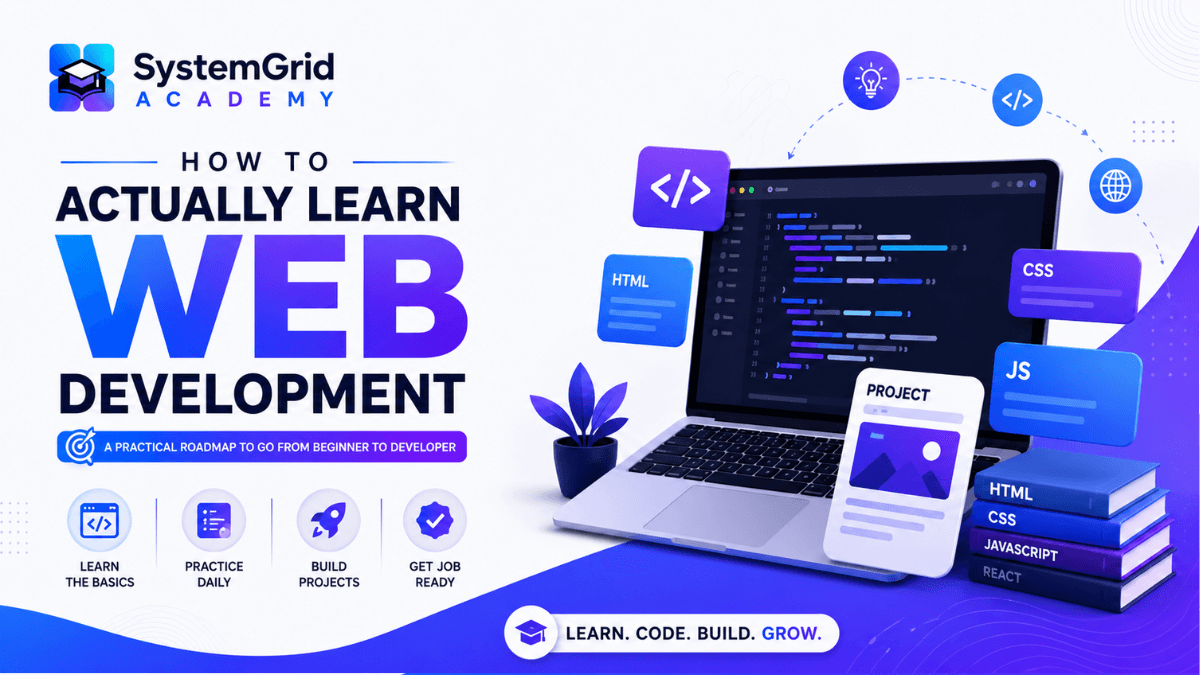
The "Tutorial Trap" Many students start their coding journey by watching endless hours of video tutorials. While it feels like you're learning, you often hit a wall the moment you try to build something on your own. This is known as "tutorial hell." To truly master web development, you need to shift from passive consumption to active creation.
A Practical Learning Path Instead of jumping between unrelated tutorials, follow this structured roadmap to build a solid foundation:
1. Master the Core Trio
Don't rush to frameworks like React or Vue. Spend your time deeply understanding:HTML: Learn to write semantic code that is accessible and well-structured.CSS: Master layouts (Flexbox and Grid) and responsive design so your sites look great on any device.JavaScript: Focus on DOM manipulation, functions, and understanding how data flows through an application.
2. Build Before You Feel Ready
The secret to retention is applying what you learn immediately. After completing a module, challenge yourself to build a small project—even if it's imperfect.Beginner Idea: A personal profile page.Intermediate Idea: A weather dashboard using a public API.Advanced Idea: A simple task tracker with local storage.
3. Use Version Control from Day One
Professional developers use Git. Start a GitHub account early, commit your code frequently, and learn to document your work. It’s not just about tracking changes; it's about building a public history of your progress. Why Projects Matter More Than Certificates When you apply for jobs or look for clients, a certificate might get you a glance, but a portfolio gets you the role. Employers want to see how you solve problems, handle bugs, and structure your code. By building and deploying your own projects, you prove that you have the practical skills necessary to deliver value. Call to Action: Ready to start building? Identify one small project you can complete this weekend and commit to it. Which project will you build first?